

Expert Knee Joint Replacement Surgery in Chennai

Knee replacement surgery is a procedure used to relieve persistent knee pain and improve mobility when severe arthritis or joint damage affects daily activities. When conservative measures fail to relieve severe arthritis pain, Dr. Kanniraj offers total or partial knee replacement — restoring joint function and improving quality of life for patients whose mobility has been significantly limited.

Knee Replacement Surgery in Chennai

Resurfacing the joint, not just treating the pain

  • Whole joint resurfaced Only damaged section resurfaced
  • Widespread arthritis Localised, single-compartment damage
  • Larger incision Often smaller incision

How knee replacement works

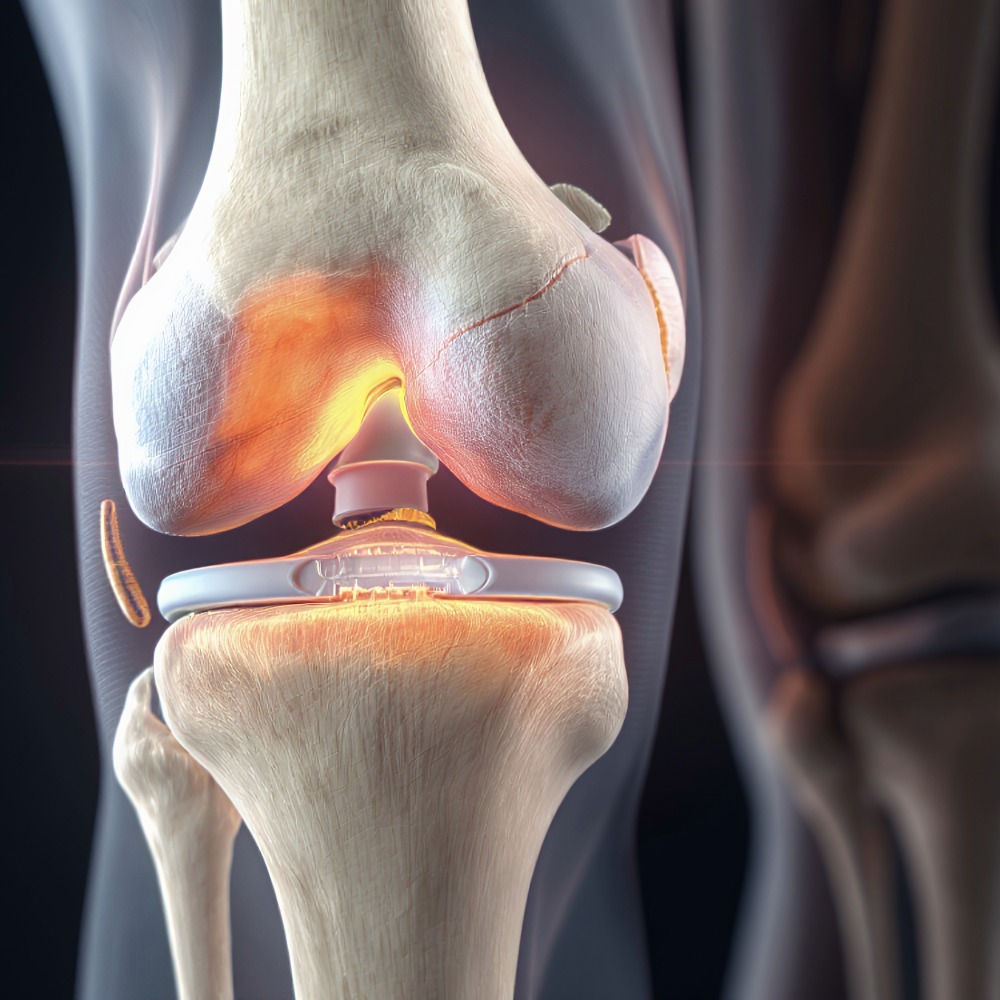
Knee replacement removes the damaged joint surfaces — worn cartilage and bone — and replaces them with a prosthetic implant designed to replicate natural knee movement. It's considered when arthritis has progressed to the point where pain and stiffness are no longer manageable with medication, injections, or physiotherapy.

Total Knee Replacemen in Chennai

Total knee replacement (TKR)

The entire joint surface is resurfaced. This is generally recommended when arthritis has affected multiple compartments of the knee, causing widespread pain and stiffness.

Partial Knee Replacement in Chennai

Partial (unicompartmental) knee replacement

Only the damaged section of the joint is resurfaced, preserving healthy bone, cartilage, and ligaments elsewhere in the knee. It's an option for patients whose arthritis is limited to one compartment, often allowing for a smaller incision and a comparatively quicker initial recovery.

Signs that replacement may be the right next step

Not every case of arthritis needs surgery — these are the signals that conservative treatment may have reached its limit.

  • Severe, persistent pain unresponsive to medication, injections, or physiotherapy
  • Pain that regularly disrupts sleep
  • Stiffness or instability that restricts walking, stairs, or daily tasks
  • Significant joint damage confirmed on X-ray or MRI
  • Reduced quality of life due to ongoing knee limitation

What knee replacement surgery involves

1

Pre-Op Workup

Imaging and a full health review to plan implant size and surgical approach.

2

Anaesthesia

Spinal or general anaesthesia, chosen based on your health profile.

3

Joint Resurfacing

Damaged bone and cartilage are removed and prepared for the implant.

4

Implant Placement

The prosthetic components are fitted and aligned to restore natural movement.

5

Closure & Early Mobilisation

Incision is closed; guided movement often begins within a day.

Rehabilitation after knee replacement

Day 1–2

Most patients begin walking with support, guided by the physiotherapy team.

Week 1–3

Structured rehab continues at home or as an outpatient, focused on strength and range of motion.

Week 4–8

Walking distance and independence steadily improve; most reduce reliance on walking aids.

Month 3+

Return to most daily activities, with continued improvement as the joint fully settles in.

Wondering if knee replacement is right for you?

Book a consultation for an honest assessment of your options — surgical and non-surgical.

FAQ

Common questions about Knee Replacement Surgery

What is the difference between total and partial knee replacement?

Total knee replacement resurfaces the entire joint and is used for widespread arthritis, while partial (unicompartmental) knee replacement resurfaces only the damaged section, preserving healthy bone and ligaments when damage is limited to one part of the knee.

Is there an age limit for knee replacement surgery?

There is no strict age cutoff. The decision is based on the severity of joint damage, overall health, and how significantly pain affects daily life, rather than age alone.

How long do knee replacement implants last?

Modern implants are designed for long-term use, with many patients getting many years of reliable function. Longevity depends on implant type, activity level, and individual factors your surgeon can discuss in detail.

How long is the hospital stay after knee replacement?

Hospital stay varies by individual and procedure, but most patients begin walking with support within a day or two of surgery before continuing rehabilitation as an outpatient or at home.

Can both knees be replaced at the same time?

Bilateral knee replacement is possible for select patients, but the decision depends on overall health, anaesthesia risk, and rehabilitation capacity, and is evaluated case by case.

Book an Appointment