
Home / Knee Treatments / Sports Injuries
Sports Injury Specialist in Chennai for Faster Recovery
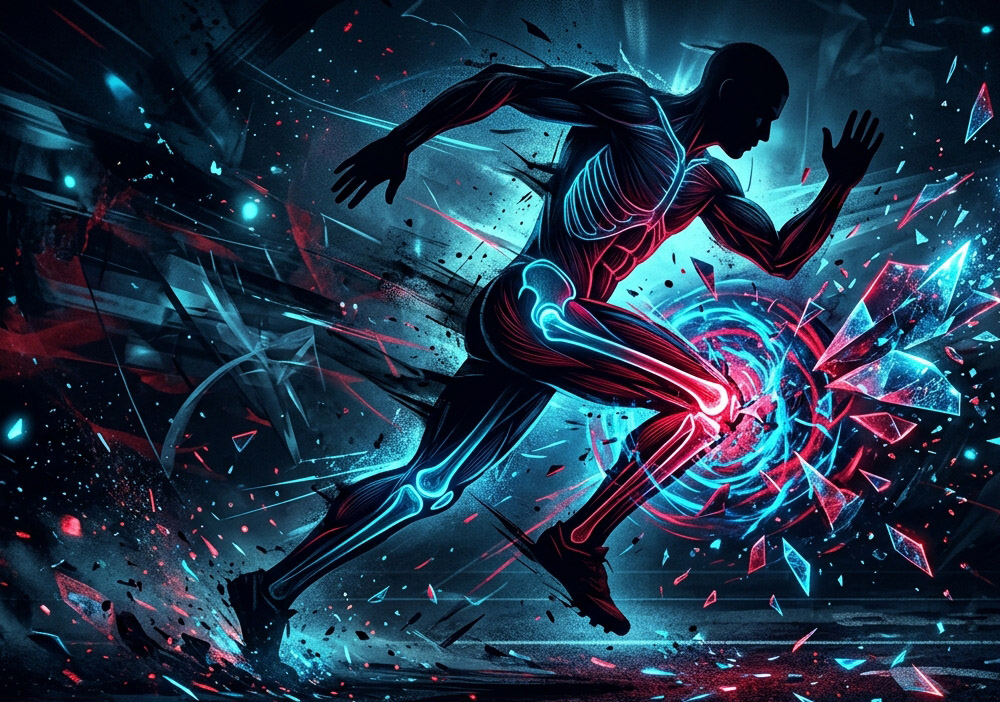
What brings athletes into the clinic
Sudden pivots, jumps, and direct contact — common in football, badminton, cricket, and running — are frequent causes of these injuries.
ACL / PCL Tears
Ligament injuries from sudden stops, pivots, or awkward landings — often needing reconstruction for return to pivoting sports.
Meniscus Injuries
Cartilage tears from twisting movements, causing pain, swelling, and locking.
Patellar Instability
Kneecap dislocation or instability, common in sports involving quick direction changes.
MCL / LCL Sprains
Side-ligament sprains from a direct blow or awkward twist, ranging from mild to complete tears.
Patellar Tendinitis
"Jumper's knee" — overuse inflammation from repetitive jumping or running.
Cartilage Damage
Chondral injury from impact or repetitive load, sometimes accompanying ligament tears.
Muscle & Tendon Strains
Quadriceps or hamstring strains around the knee from sprinting or sudden exertion.
Recurrent Instability
A knee that repeatedly "gives way" during activity, often signalling ligament laxity.
Why prompt, accurate diagnosis matters
Prompt and accurate diagnosis is essential for effective sports injury treatment in Chennai. A detailed evaluation helps identify the exact cause and severity of an injury, whether it involves the ligaments, muscles, tendons, cartilage or joints. Early diagnosis can help guide appropriate treatment, support a safe return to activity and reduce the risk of further injury.
Dr. Kanniraj provides personalised assessment and treatment plans based on the patient’s injury, activity level and recovery goals.
The risk of delayed treatment
Delaying treatment for a significant ligament or cartilage injury can allow secondary damage to develop — further cartilage wear or ongoing instability that affects performance well beyond the original injury. An early, accurate diagnosis keeps every treatment option, surgical and non-surgical, open.
How diagnosis works
Assessment combines a detailed clinical examination with imaging to confirm exactly which structures are involved — a torn ligament behaves differently from a meniscus tear or a muscle strain, and treatment is built around that specific finding.
Choosing the right treatment path
Depending on severity, treatment may range from a structured non-surgical rehabilitation program to arthroscopic ACL reconstruction or meniscus repair, always weighed against the athlete's sport, position, and competitive level — not a one-size answer for every ligament tear.
Recovery is milestone-based, not calendar-based
Progression through each phase depends on meeting specific strength, stability, and confidence benchmarks — not simply the number of weeks that have passed.
Phase: Pain & Swelling Control
Reducing inflammation and restoring basic range of motion.
Phase: Strength & Stability
Rebuilding muscle support around the joint and correcting movement patterns.
Phase: Sport-Specific Drills
Introducing running, cutting, and agility work relevant to the athlete’s sport.
Phase: Supervised Return to Play
Full training and competition, cleared once strength and confidence benchmarks are met.
Injured during sport or training?
Get an accurate diagnosis early and a return-to-sport plan built around your goals.
FAQ
Common questions about sports injury treatment
Can athletes fully recover from ACL tears?
Yes. With ACL reconstruction and a structured, milestone-based rehabilitation program tailored to the athlete's sport and goals, most patients regain stability and are able to return to competitive activity.
Do all ligament tears need surgery?
No. Mild sprains, particularly of the MCL or LCL, often heal well with structured physiotherapy and bracing. More significant tears, especially of the ACL in athletes wanting to return to pivoting sports, more often benefit from surgical reconstruction.
How soon can an athlete return to sport after an ACL injury?
Timelines vary by injury severity, treatment approach, and sport, but ACL reconstruction typically involves a structured rehabilitation program spanning several months before a supervised return to competitive activity.
How can I reduce the risk of re-injuring my knee?
Completing the full rehabilitation program rather than stopping once pain resolves, along with ongoing strength and movement-pattern training, meaningfully reduces re-injury risk compared to returning to sport early.
Are sports injuries treated differently in young athletes?
Growth plate considerations and long-term joint health are factored into treatment planning for younger athletes, alongside the same principles of accurate diagnosis and structured, sport-specific rehabilitation.