
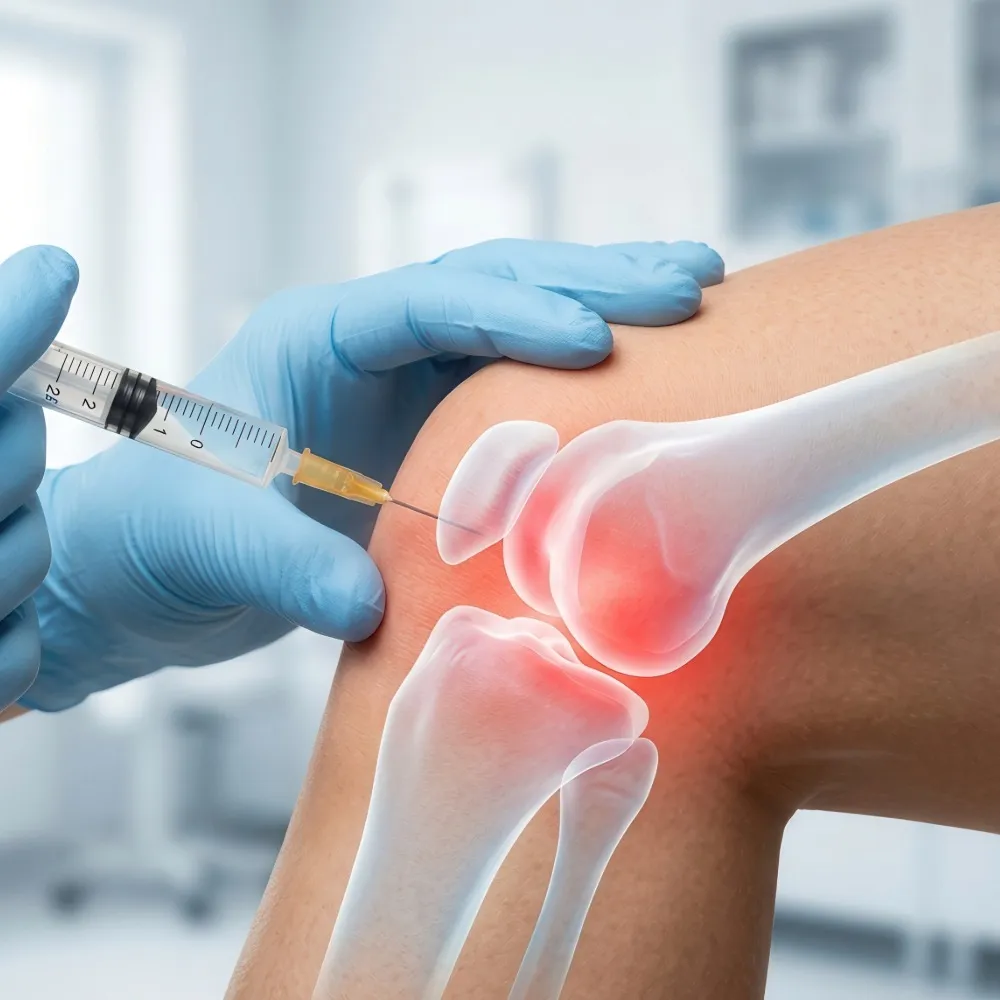

Comprehensive Non-Surgical Knee Pain Treatment in Chennai

Non-surgical knee pain treatment can help manage pain, improve mobility and support better knee function without immediate surgery. Treatment may include medication, physiotherapy, activity modification, exercises and other conservative approaches, depending on the underlying condition. Dr. Kanniraj evaluates each patient individually and recommends a suitable treatment plan based on the severity and cause of knee pain.

Best Orthopaedic Doctor in Chennai

Not every source of knee pain needs an operation

Early osteoarthritis, tendinitis, bursitis, and mild-to-moderate ligament strains often respond well to structured non-surgical care — and starting there avoids unnecessary surgical risk and downtime.

Anti-Inflammatory Treatment

Targeted medication to reduce pain and swelling during flare-ups and active recovery.

Supervised Rehabilitation

Structured strengthening and mobility exercises to rebuild support around the joint.

Load Management

Adjusting activity levels and technique to reduce stress on the affected joint while it recovers.

Support & Stability

External support to protect the joint during daily activity or early-stage recovery.

Joint Lubrication Injections

Can improve joint comfort for select patients with early-to-moderate arthritis.

Platelet-Rich Plasma

Used for select tendon conditions and early joint changes, often alongside physiotherapy.

Treatment isn't a one-time prescription

  • Early-stage osteoarthritis
  • Tendinitis or bursitis
  • Mild-to-moderate ligament sprains
  • Patients looking to delay surgery safely
  • Post-injury conservative management

Assessment first

Every non-surgical plan starts with a clear diagnosis — understanding exactly which structures are involved and how severe the damage is, so the treatment combination actually matches the problem.

Total Knee Replacemen in Chennai

A tailored combination

Most plans combine more than one tool from the toolkit — for example, physiotherapy alongside activity modification and short-term medication — rather than relying on a single intervention.

Partial Knee Replacement in Chennai

Monitored and adjusted

Progress is reviewed at follow-up visits, and the plan is adjusted based on how the knee responds — continuing conservative care where it's working, or escalating toward arthroscopic or replacement surgery only if pain and function don't improve as expected.

When non-surgical care is enough — and when it isn't

FactorNon-Surgical Care Likely SufficientSurgery Likely Needed
SeverityEarly-to-moderate pain, structure largely intactSignificant structural damage confirmed on imaging
Response to treatmentImproving with physiotherapy and conservative carePlateaued despite consistent conservative treatment
FunctionManageable impact on daily activitySignificant, ongoing limitation despite treatment

Want to try conservative treatment first?

Book a consultation to find out whether non-surgical care is the right starting point for your knee.

FAQ

Common questions about Non Surgical knee surgery

Will I definitely need surgery for knee pain?

No. Many knee conditions, especially early-stage arthritis, tendinitis, and mild ligament strain, are managed effectively with non-surgical treatment. Surgery is recommended only when conservative measures do not relieve pain or restore function.

Does physiotherapy actually work for knee pain?

Yes, for many conditions. Targeted strengthening and mobility exercises, done consistently under guidance, can meaningfully reduce pain and improve function, particularly for early arthritis, tendinitis, and mild-to-moderate strains.

Are PRP or viscosupplementation injections painful?

These injections are performed using local anaesthesia and are generally well tolerated, with any discomfort typically brief and manageable, similar to a routine injection.

Can non-surgical treatment delay knee replacement indefinitely?

For some patients with slowly progressing arthritis, non-surgical care can provide meaningful relief for an extended period. For others with more advanced joint damage, it delays but does not replace the eventual need for surgery, and this is reassessed at follow-up visits.

How many physiotherapy sessions are typically needed?

This varies by condition and severity, and is set individually based on your diagnosis and progress rather than a fixed number, with your treatment plan reviewed and adjusted at follow-up.

Book an Appointment